Low Competition Eco-Friendly School Project Ideas for Local Eco Clubs
A good school eco project does not need a grant, a greenhouse, or a semester-long plan. The best ones often start with a lunch tray, a leaky faucet, a patch of grass, or a pile of cardboard boxes waiting for recycling.
For schools and local eco clubs, the hard part is often choosing a project that feels fresh but still doable. Broad ideas like “recycling project” or “save the planet campaign” are crowded and vague. More specific phrases can lead to better plans, clearer goals, and projects that are easier to explain to teachers, families, and community partners.
This guide focuses on low competition eco-friendly school project ideas that match the kinds of detailed searches eco clubs often make. Each idea includes a practical project angle, simple materials, and search-friendly phrases that can help shape posters, newsletters, club pages, or project proposals.
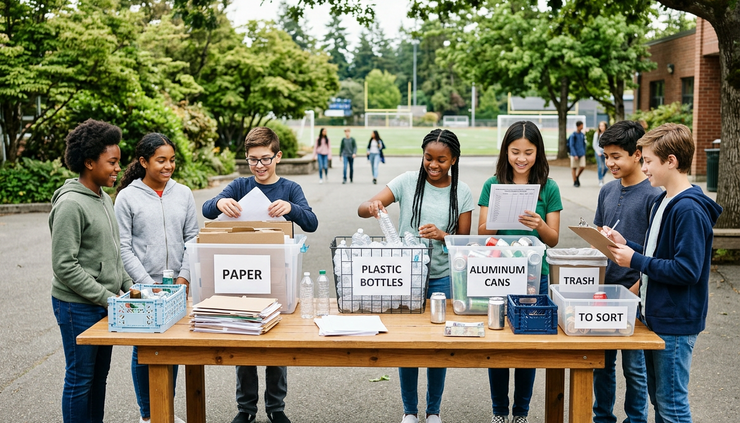
Start with a school lunch waste audit
A lunch waste audit is one of the easiest eco club projects to start because it uses what the school already has. Students measure what gets thrown away during lunch, then look for patterns.
The project can be simple. Set up clearly labeled bins for unopened food, compostable scraps, recyclables, liquids, and landfill trash. At the end of lunch, students record what they see. They do not need to touch unsafe waste. Visual counts, container volume, or supervised weighing can work.
Good search phrases for this idea include:
`school lunch waste audit project`
`cafeteria waste sorting activity`
`student food waste reduction project`
`zero waste lunch challenge for schools`
`eco club cafeteria trash audit`
These phrases work well because they are specific. They point to a real project, not just a broad topic.
A strong lunch waste audit can lead to several follow-up actions:
Create a share table for unopened packaged food, if school policy allows it
Remind students to take only what they plan to eat
Ask the cafeteria to adjust portions for common leftovers
Add clearer bin signs with photos of actual school lunch items
Start a weekly “pack it in, pack it out” lunch challenge
The key is to keep the first audit short. One lunch period can give enough information to begin. A week of audits gives a better picture, but it also takes more volunteers.
For a club display, turn the results into a simple chart. Instead of saying “we create too much waste,” show what was found. For example, “Most unopened items came from fruit cups and milk cartons” gives the club a concrete next step.
Best fit
Elementary schools, middle schools, high schools, environmental science classes, student councils, and cafeteria partnerships.
Build a low-cost compost system that matches the school
Composting sounds simple until a club has to decide where the compost will go, who will manage it, and what happens during school breaks. That is why smaller, more specific compost projects are easier to complete than a large campus-wide program.
A school can start with classroom compost jars for fruit and vegetable scraps, a garden compost bin, or a worm bin managed by one science class. The right choice depends on space, adult support, and local rules.
Useful low-competition phrases include:
`classroom compost jar experiment`
`school garden compost bin project`
`worm bin project for elementary school`
`cafeteria scraps composting pilot`
`composting project for eco club`
A compost pilot works best when the club has a narrow list of accepted items. Fruit peels, vegetable scraps, coffee grounds from the staff room, and shredded paper are easier to manage than mixed lunch waste.
A simple plan might look like this:
Project part | Simple choice |
Collection point | One classroom or garden area |
Accepted materials | Fruit scraps and shredded paper |
Student role | Collect, record, and mix materials |
Adult role | Check moisture and safety |
Final use | Add finished compost to school garden soil |
Compost projects also make strong science connections. Students can track temperature, moisture, decomposition, soil texture, and insect activity. They can compare scraps that break down quickly with items that take longer.

For younger students, a clear visual system helps. Use green signs for “yes” items and red signs for “no” items. Add real photos from the school cafeteria or classroom instead of generic clip art.
For older students, make the project data-based. Track how much material avoids the trash each week. Record how long it takes scraps to break down. Compare soil with and without compost in a small plant growth test.
The most common reason compost projects fail is not lack of interest. It is lack of a maintenance plan. Keep the first version small enough that one class, one club, or one garden team can handle it.
Create a native plant or pollinator patch
A full school garden can be expensive and hard to maintain. A native plant patch is more manageable. It can fit beside a walkway, near a fence, by a library entrance, or in a corner of the schoolyard.
The goal is to plant species that support local insects, birds, and soil health. Native plants often need less water once established, though they still need care in the beginning. The exact plants should match the region, climate, and school site.
Eco clubs can search with phrases such as:
`native plant garden school project`
`pollinator patch for schoolyard`
`school biodiversity garden ideas`
`low maintenance eco club garden`
`butterfly garden project for students`
A good pollinator patch starts with observation. Before planting, students can visit the site at different times of day and record sunlight, standing water, foot traffic, and existing plants. They can also sketch where students walk so the garden does not block busy paths.
A small project plan might include:
Choose a sunny area that does not interrupt outdoor activities
Ask maintenance staff about mowing, irrigation, and underground utilities
Select a few native plants with different bloom times
Add mulch to reduce weeds
Place a small sign explaining what the patch supports
Create a student watering schedule for the first season
This project pairs well with a biodiversity survey. Students can count butterflies, bees, beetles, birds, and other visible wildlife before and after planting. The point is not to promise dramatic results. The goal is to teach students how habitat changes affect what they observe.
A native plant patch can also become a living classroom. Art classes can sketch leaves and flowers. Science classes can study life cycles. Language arts classes can write field notes or nature poems.
If space is limited, use planters. A few large containers with native flowers can still support pollinators and brighten hard surfaces.
Turn recycling into a repair and reuse challenge
Recycling is familiar, which can make it feel boring. A repair and reuse challenge gives it new energy. Instead of only asking, “Can this go in the recycling bin?” students ask, “Can this item have another use first?”
This type of project is especially useful because it does not depend on perfect recycling rules. Local recycling programs vary, and students often get confused by what each bin accepts. Reuse avoids part of that problem.
Search-friendly phrases include:
`upcycling project for school eco club`
`cardboard reuse challenge school`
`plastic bottle greenhouse school project`
`milk carton seed starter activity`
`school supply swap eco project`
`repair station project for students`
The club can run a one-week challenge where classrooms collect clean materials such as cardboard, jars, fabric scraps, paper tubes, and milk cartons. Then students turn them into useful items.
Project examples include:
Milk carton seed starters for a school garden
Cardboard drawer dividers for classroom supplies
Plastic bottle mini greenhouses for seedlings
Fabric scrap bookmarks
Jar pencil holders
Reused paper notebooks made from blank-sided worksheets

A supply swap is another strong option. At the end of a semester or school year, students bring gently used folders, binders, notebooks with unused pages, calculators, rulers, and art supplies. The club sorts them and offers them back to students or classrooms.
This project works because it connects waste reduction with real school needs. Families spend less on supplies, classrooms build a reserve, and fewer usable items end up in trash bins.
For a local eco club, the search phrase `school supply swap eco project` can become the project title. It is clear, practical, and easy to promote.
A repair station can also work for older students. Choose simple fixes only, such as taping torn folders, replacing missing binder rings when supplies are available, or cleaning and testing markers. Avoid electrical repairs or anything that needs specialized tools unless trained adults supervise the work.
The best reuse projects have a clear end user. If students make 200 pencil cups but no classroom needs them, the project becomes clutter. Start by asking teachers and office staff what reusable items would help.
Run a campus energy and water check
Energy and water projects can feel too technical, but a student-friendly check can stay simple. The club looks for everyday waste, records it, and suggests fixes.
This is not the same as a professional audit. Students do not open equipment, handle wiring, or change building systems. They observe patterns that adults can review.
Specific phrases to build around include:
`student energy audit checklist`
`classroom lights off campaign`
`school water conservation project`
`leaky faucet survey at school`
`eco club energy saving challenge`
`no idling campaign school pickup line`
A basic energy check can focus on visible habits:
Lights left on in empty rooms
Projectors or screens left on after class
Doors propped open while heating or cooling runs
Chargers plugged in with no device attached
Windows open while climate control is on
A water check can focus on:
Dripping faucets
Running toilets
Outdoor sprinklers watering pavement
Water fountains with slow leaks
Areas where rainwater puddles or runs off quickly
Turn the results into a respectful report. The goal is to help, not blame. For example, instead of naming a classroom, write “Several empty rooms had lights on during lunch.” Then suggest a school-wide reminder system.
A lights-off campaign can be simple. Students create small switch plate reminders and assign “last out, lights out” roles in classrooms. A no-idling campaign can use student-made signs near pickup areas, with school approval. Keep messages friendly and factual.
Small habits are easier to change when students can see them, measure them, and repeat them every day.
For older students, connect the project to math. Count how many rooms have lights on during a set time. Track changes after reminders go up. Compare the first week and the fourth week. Even without calculating exact energy savings, students learn how behavior affects resource use.
These checks can also build trust with custodial and maintenance teams. Invite them into the planning process early. They know the building better than anyone and can tell students which ideas are safe and realistic.
Help projects get found with specific search phrases
Great eco projects often disappear after they happen because nobody names them clearly. A specific project title helps the next club, teacher, or parent volunteer find and repeat the idea.
Instead of titling a page “Green Team Project,” use a phrase that describes the action:
Vague title | Better searchable title |
Recycling project | Cardboard reuse challenge for school classrooms |
Garden project | Native pollinator patch for a schoolyard |
Food project | School lunch waste audit project |
Energy project | Classroom lights off campaign |
Water project | Leaky faucet survey at school |
Compost project | Worm bin project for elementary school |
The better titles work because they answer three questions:
What is the project?
Where does it happen?
Who can use it?
This matters for school websites, club newsletters, parent emails, and local community pages. Clear phrases also make it easier to create printable instructions.
A useful project page or flyer should include:
The project name
The goal
Materials needed
Time required
Safety notes
Adult permissions needed
Student roles
What success looks like
For example, a flyer titled `school lunch waste audit project` can explain that the goal is to measure cafeteria waste for one week and recommend two changes. That title is much easier to find later than “Eco Week Activity.”

How to choose the right project for the school
The best project is not always the biggest one. It is the one the club can finish, explain, and repeat.
Before choosing, ask a few practical questions:
Can students complete the first version in two to six weeks?
Does the project need permission from the principal, cafeteria, or maintenance staff?
Are the materials low-cost or already available?
Is there a clear student role?
Can the club measure something before and after?
Will someone maintain it after the launch?
A good first project might be a one-day lunch waste audit, a classroom compost jar experiment, or a school supply swap. A larger project, such as a pollinator patch or cafeteria composting pilot, may need more planning.
For local eco clubs, the strongest approach is to build a small menu of repeatable projects. One club can run the lunch audit in fall, the supply swap in winter, the native plant patch in spring, and the water check before summer break. Each project leaves behind notes for the next group.
Low-competition phrases help here because they keep the idea narrow. A student searching for `plastic bottle greenhouse school project` is probably ready to build something. A teacher searching for `student energy audit checklist` likely needs a practical tool, not a broad essay about climate change.
Clear names lead to clear action.
The takeaway is simple: choose a project small enough to finish, specific enough to search, and useful enough to repeat. A local eco club does not need to solve every environmental problem at once. It can start with one lunch period, one garden bed, one hallway, or one box of supplies, then build from there.


Comments